
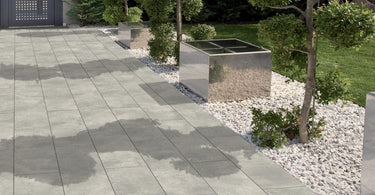
Natural stone is beautiful, but it is not the right choice for every home or every budget. Before you commit, it is worth knowing exactly what you are signing up for. Here are the honest pros and cons of natural stone tiles and paving, and how they compare with porcelain.
The pros of natural stone
- Every piece is unique. Real veining and colour variation give a patio or floor genuine character.
- It ages well. Stones such as travertine and basalt develop a soft patina rather than looking worn.
- It suits period properties. Natural stone sits comfortably next to brick, flint and old timber.
- Dense stones are very hard-wearing. Basalt and granite cope with heavy foot traffic and, as setts, even vehicles.
The cons of natural stone
- It usually needs sealing. Most stones are porous, so they absorb water, oil and red wine unless sealed and resealed every few years.
- It can stain and grow algae. Shady UK gardens are hard on porous stone – expect more cleaning.
- Softer stones can mark or etch. Marble and limestone react to acids such as lemon juice and some cleaners.
- Thickness varies. Hand-cut or calibrated stone can vary slightly in thickness, which makes laying slower.
- Some finishes get slippery. Polished stone should not be used outdoors; choose tumbled, sawn or textured finishes.
Natural stone vs porcelain paving: a quick comparison
| Natural stone | Outdoor porcelain | |
|---|---|---|
| Look | Genuine, every piece different | Realistic stone, wood or concrete effects |
| Water absorption | Varies, often high | Very low (under 0.5%) |
| Sealing | Usually needed | Not needed |
| Staining and algae | More prone | Highly resistant |
| Frost resistance | Depends on the stone | Excellent |
| Laying | Full mortar bed, sometimes primer | Full mortar bed plus slurry primer |
How to keep natural stone looking its best
- Seal after installation with a stone sealer, and reseal as the manufacturer recommends.
- Sweep regularly and wash with a pH-neutral cleaner – see our cleaning and maintenance products.
- Wipe spills quickly, especially oil, wine and citrus.
- Avoid acidic or bleach-based cleaners on marble and limestone.
Which should you choose?
Choose natural stone if authenticity matters most and you are happy with a little extra care – explore our natural stone range. Choose porcelain if you want the look of stone with minimal upkeep – browse stone-effect porcelain or our full outdoor porcelain paving range.
For more on types, uses and installation, read our natural stone paving guide.
Need help deciding?
Order samples to see both side by side in your own garden light, work out quantities with the tile calculator, or call our team on 01565 621153. Delivery is free on orders over £500 to England and Wales – see delivery details.