
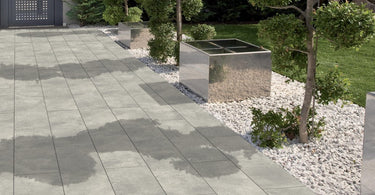
Natural stone paving has been used in British gardens for centuries, and for good reason: no two slabs are identical, it weathers gracefully and it suits both period homes and modern builds. This guide explains the main types of natural stone, where each one works best and how to lay it properly.
What is natural stone paving?
Natural stone paving is quarried stone – such as travertine, marble, basalt, limestone or sandstone – cut into slabs, setts or cobbles for outdoor use. Unlike porcelain, which is manufactured, every piece has its own veining, colour shifts and texture. Browse our current natural stone collection to see the options.
Common types of natural stone and where to use them
- Travertine: warm, Mediterranean look with natural pores. Ideal for patios and pool surrounds. Try Durango Travertine or Silver Travertine in 600x900mm.
- Marble: elegant and bright. Tumbled marble setts, such as Marble Artic Grey Tumbled, soften the look and give better grip outdoors.
- Basalt: a dense, dark volcanic stone that copes well with heavy use. Basalt tumbled cobbles are popular for driveway borders and paths.
- Sandstone and limestone: classic UK choices, but softer and more porous, so they need regular sealing.
Benefits of natural stone paving
- Character: genuine variation that cannot be printed.
- Longevity: laid correctly, dense stones last for decades.
- Value: a well-built stone patio adds kerb appeal to a property.
- Flexibility: multi-size sets let you create random, traditional patterns – see the Philly Travertine multi-size set.
The trade-off is maintenance: most natural stone should be sealed and cleaned more often than porcelain. If you want a low-maintenance alternative with a stone look, compare our stone-effect porcelain paving. Our article on the pros and cons of natural stone sets both options side by side.
How to lay natural stone paving
- Plan and measure: mark out the area and allow a fall of around 1:60 away from the house so rainwater drains.
- Excavate and build a sub-base: dig out and lay a compacted MOT Type 1 sub-base (typically 100mm for patios, deeper for driveways).
- Lay on a full mortar bed: bed each slab on a full, even bed of mortar – never on dabs, which leave voids that crack slabs and trap water.
- Use a primer where needed: dense stones such as basalt and polished marble bond better with a slurry primer on the back.
- Joint and seal: point the joints once the bed has set, then seal porous stones with a suitable stone sealer.
For a full walkthrough, read our installation guide.
Ordering tips
- Work out the area with our tile calculator and add 10–15% for cuts – natural stone has more natural variation, so extra helps with blending.
- Blend slabs from different crates as you lay.
- Delivery is free on orders over £500 to England and Wales – see delivery and ordering information.
- Trade customers can apply for a trade account. For advice, call 01565 621153 or contact us.