
Last updated: 16 November 2026 · By the Tiles & Pavers team, Knutsford, Cheshire
Quick answer: The best floor tiles for most kitchens are matt porcelain tiles with a slip rating of R10 or above in the working zones around the sink and hob. Porcelain is dense, needs no sealing and works with underfloor heating. Large formats such as 600x1200mm or 800x800mm make a kitchen feel bigger, as long as the subfloor is flat and sound.
A kitchen floor takes more punishment than almost any other floor in the house: spills, dropped pans, chair legs, wet feet and constant foot traffic. Winter is also when many people plan a new kitchen for spring, so it is the right time to get the floor decision right before the units are ordered. Here is what to check.
Which tile material is best for a kitchen floor?
Porcelain is the most practical choice for a kitchen floor. It is very hard-wearing, it resists water and stains, and it does not need sealing. Ceramic is fine for walls and splashbacks, but for floors porcelain is the safer long-term option. Browse our kitchen tiles or the full floor tiles range.
| Flooring | Coping with water and spills | Underfloor heating |
|---|---|---|
| Porcelain tiles | Excellent; low absorption, no sealing needed | Yes, with a flexible adhesive suitable for heated floors |
| LVT / vinyl | Water resistant | Generally yes; check the manufacturer |
| Laminate | Spills must be wiped up quickly; cheaper boards can be damaged by water | Generally yes; check the manufacturer |
| Solid wood | Can twist or warp with moisture and heat | Check carefully; engineered wood is the usual choice |
What slip rating do kitchen floor tiles need?
Floor tiles are often rated using the R scale (R9 upwards), from a ramp test on an oily surface; the higher the number, the more grip. For domestic kitchens, R10 or above is the commonly recommended rating in the working zones, where water and grease end up on the floor. R11 is typically used outdoors. Many indoor tiles are R9, which is designed for dry living areas, so compare the slip rating on each product page and ask us if it is not shown.
Matt or polished: which finish is better for a kitchen?
For most kitchens, matt is the better choice. It hides everyday marks and gives more confidence underfoot. Polished porcelain reflects light beautifully, but it can be slippery when wet and high-gloss surfaces show dirt and footprints more. If you love a polished look, consider keeping it away from the sink and hob. Explore our matt finish tiles, or read our full guide to polished vs matt porcelain tiles.
What size tiles are best for a kitchen floor?
- Large format (600x1200mm, 800x800mm and above): fewer grout lines, a calmer look and a sense of more space, especially in open-plan kitchen-diners. See our large format tiles.
- 600x600mm: a versatile, easier-to-handle size for smaller kitchens or uneven rooms.
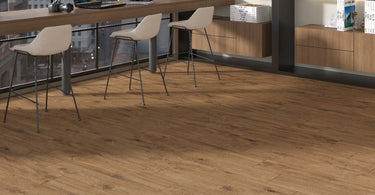
- Plank tiles: wood-effect porcelain such as Haritage Carmel Matt 200x1200mm gives the warmth of timber without the worry about water.
The bigger the tile, the flatter the subfloor must be. Large tiles on an uneven floor can show lippage (edges that sit higher than their neighbours), which is why tilers often use a tile levelling system with large formats.
Should you tile the kitchen floor before or after fitting the units?
There is no single right answer, and tilers and kitchen fitters genuinely disagree. Many prefer to tile first; others tile only to the visible areas. Weigh up the trade-offs:
| Tile before the units | Tile after the units | |
|---|---|---|
| Pros | Neat, continuous finish; no tricky cuts around cabinets; easier to change the layout later | Fewer tiles needed; less risk of damaging the new floor during fitting |
| Cons | More tiles, including under cabinets; floor must be protected while the kitchen is fitted | Precise cuts around plinths and islands; if you change the kitchen later, matching tiles may be hard to find |
Whichever you choose, plan heights with your kitchen fitter so appliances still slide in once the floor is down, and buy a few spare tiles for future repairs.
How do you prepare a kitchen floor for tiling?
- Check the subfloor is level, sound and dry. Your tiler may use backer boards or a self-levelling compound to correct it.
- Use a flexible tile adhesive, especially over underfloor heating.
- Allow for movement joints at the perimeter and across large open-plan floors.
- Order enough tiles. Measure the room and add at least 10% for cuts and wastage, or 15–20% for diagonal or complex layouts. Our tile calculator works it out in boxes, and our guide on how many tiles you need explains the maths.
What grout colour works best in a kitchen?
A grout colour close to the tile gives a seamless, spacious look, which suits large formats. A contrasting grout makes the layout a feature, for example with plank or patterned tiles. Light grout on a busy kitchen floor will need more cleaning, so many people choose a mid-tone.
Key takeaways
- Matt porcelain is the most practical all-round kitchen floor tile.
- Look for R10 or above in the working zones and check the rating on each product.
- Large formats look great but need a flat subfloor and careful levelling.
- Decide early whether to tile before or after the units, and agree heights with your fitter.
- Add at least 10% for wastage and keep spare tiles.
Frequently asked questions
What is the best type of tile for a kitchen floor?
Porcelain is the best all-round choice for most kitchen floors. It is hard-wearing, resists water and stains, needs no sealing and works with underfloor heating. A matt finish is the most practical for everyday use.
Are porcelain tiles slippery in a kitchen?
It depends on the finish and slip rating. Polished porcelain can be slippery when wet, while matt tiles with an R10 rating or above are commonly recommended for the working zones of a kitchen. Check the slip rating on each product page.
Can you put large format tiles in a small kitchen?
Yes. Large tiles such as 600x1200mm reduce grout lines and can make a small kitchen feel bigger. The subfloor must be flat, and a tile levelling system helps prevent uneven edges.
Should kitchen floor tiles go under the units?
Both approaches are used. Tiling under the units gives a continuous floor and makes future layout changes easier but uses more tiles; tiling around them saves material but needs precise cuts. Agree the approach and finished floor height with your kitchen fitter.
Can you use underfloor heating with porcelain kitchen tiles?
Yes. Porcelain conducts heat well and is a popular choice over underfloor heating. Use a flexible adhesive suitable for heated floors and follow the heating manufacturer's installation guidance.
Try your kitchen floor tiles at home first
Colours and finishes look different under kitchen lighting, so order samples before you commit. Your first 3 samples are free, with free delivery. For help choosing a kitchen floor tile, call our Knutsford team on 01565 746144 or contact us online.