
Last updated: 9 November 2026 · By the Tiles & Pavers team, Knutsford, Cheshire
Quick answer: The best floor tiles for most UK hallways are matt porcelain tiles with good wet grip, ideally rated R10 or R11 near the front door, in a mid-tone colour that hides mud and grit. Porcelain is hard-wearing and absorbs very little water, so it copes with wet boots, pushchairs and dogs. Larger formats such as 600x600mm or long wood-effect planks mean fewer grout lines and make a narrow hall look bigger.
Your hallway takes more punishment than any other floor in the house, and never more so than from October to March, when rain, leaves and grit come in on every pair of shoes. If you are planning a hallway makeover this winter, this guide covers the five decisions that matter most: material, slip resistance, size, colour and grout, plus the practical details that are easy to miss.
Why are porcelain tiles good for hallways?
Porcelain is fired at high temperatures into a dense body that absorbs very little water. Under the tile standard EN 14411, porcelain tiles have a water absorption of 0.5% or less. In a hallway, that means:
- It shrugs off water and mud. Wet shoes and umbrellas will not soak in or stain the tile body.
- It resists wear. Grit is the main enemy of hallway floors, and porcelain stands up to it far better than most softer flooring.
- It is easy to clean. A sweep and a damp mop is usually all it needs, and it does not need sealing.
- It works with underfloor heating. Porcelain conducts heat well, which takes the chill off a cold entrance.
What slip rating do you need for hallway tiles?
Most hallway guides recommend a matt or textured tile rated around R10 to R11 for entrances, because the first few metres inside the front door regularly get wet. Gloss and polished tiles look striking but become more slippery when wet, so they are better suited to rooms that stay dry. If you love a polished look, keep it further back from the door and use a large doormat. Slip ratings are listed per product, so check the specification before you order, and ask us if a rating is not shown. Our guide to polished vs matt porcelain tiles explains the trade-off in more detail.
Which hallway tile is right for your home?
| Option | Look | Grip when wet | Best for |
|---|---|---|---|
| Matt porcelain, 600x600mm | Clean, modern, few grout lines | Good; check the R rating | Most family hallways |
| Wood-effect porcelain plank, e.g. 200x1200mm | Warm, like timber boards | Good in matt finishes | Long, narrow halls and period homes |
| Large format, 600x1200mm or bigger | Almost seamless | Good in matt finishes | Wide halls and open-plan entrances |
| Polished porcelain | Glossy, reflects light | Lower when wet | Dry inner halls, away from the front door |
Browse our full range of floor tiles, or filter by matt finish for the most practical hallway options.
What size tiles make a narrow hallway look bigger?
Larger tiles such as 600x600mm or 600x1200mm reduce the number of grout lines, which makes the floor read as one surface and the space feel larger. Our large format tiles include 600x1200mm, 800x800mm and 1000x1000mm sizes. How you lay rectangular tiles changes the effect:
- Lengthwise, along the hall: draws the eye towards the far end and emphasises length. It also suits wood-effect planks, which look most natural running like floorboards.
- Across the hall: the long edges run side to side, which can make a narrow corridor feel wider.
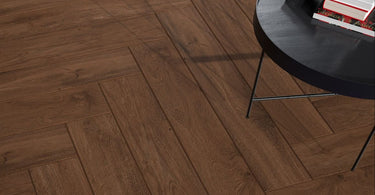
Lay out a few tiles or samples both ways in the space before you commit. Plank tiles such as Haritage Noce Matt 200x1200, a dark wood-effect porcelain designed for indoor floors including hallways, give the warmth of parquet without the maintenance of real wood.
What colour tiles and grout are best for a hallway?
Mid-tones such as warm greys, stone and taupe are the most forgiving because they hide everyday dirt between cleans. Very dark floors show dust and dried water marks, while bright white shows mud. Lighter tones do reflect more light, which helps in a hall with no window, so if you prefer a pale floor choose a slightly mottled or textured design rather than a flat white.
Grout matters just as much. White grout in a hallway soon looks grubby, so a mid-tone or darker grout close to the tile colour is far easier to live with. A low-contrast grout also makes the floor look more continuous.
What else should you plan before tiling a hallway?
- Check the subfloor is level and sound. Large and long tiles show any dip or hump. A tile levelling system helps keep edges flush; see our guide Do You Need a Tile Levelling System?
- Plan the doorways and thresholds. Where tiles meet carpet or wood in other rooms, use a neat threshold strip and check the finished heights so doors still open.
- Allow for a doormat. A good mat inside the front door catches grit and water before it reaches the tiles, which protects both the surface and the grip.
- Work out quantities. Hallways have lots of cuts around doors and stairs, so allow at least 10% extra for cuts and wastage. Our tile calculator works out how many boxes you need.
- Order samples first. Hallway light is often poor, so check colours in place, morning and evening.
Key takeaways
- Matt porcelain is the most practical hallway floor: hard-wearing, low absorption and easy to clean.
- Choose good wet grip near the front door; R10 to R11 is a sensible target for entrances.
- Bigger tiles and fewer grout lines make a narrow hall feel larger.
- Mid-tone tiles and grout hide dirt best; a doormat protects the floor.
Frequently asked questions
What is the most hard-wearing floor tile for a hallway?
Porcelain is one of the most hard-wearing choices for a hallway. It is dense, absorbs 0.5% water or less, resists scratching from grit and does not need sealing, which makes it ideal for busy entrances.
Are polished tiles a good idea in a hallway?
They can work in a dry inner hall, but polished tiles become more slippery when wet. Near the front door, a matt or textured tile with good wet grip is the safer choice, ideally around R10 to R11.
Should hallway tiles run lengthways or across?
Both work. Laying rectangular tiles lengthways emphasises the length of the hall and suits wood-effect planks, while laying them across can make a narrow hall feel wider. Test a few tiles both ways before deciding.
What colour grout is best for hallway floor tiles?
A mid-tone or darker grout close to the tile colour is the most practical, because white grout quickly shows dirt in a busy hallway. Matching the tile colour also gives a more seamless look.
Can you put underfloor heating under hallway tiles?
Yes. Porcelain works well with underfloor heating because it conducts and holds heat effectively. Follow the heating system and adhesive manufacturers' instructions for installation and the first warm-up.
Ready to choose your hallway floor? Order up to three free samples with free delivery from our floor tiles range, or call our Knutsford team on 01565 746144 for help with quantities and finishes. You can also contact us online.