
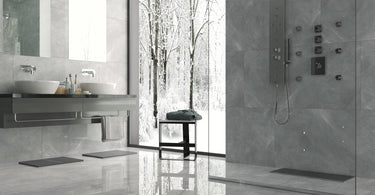
Bathrooms are the toughest room in the house for tiles: constant moisture, steam, soap, cleaning products and wet, bare feet. So which material is best? Here we compare porcelain with ceramic, natural stone, vinyl and quartz – specifically for bathrooms, en-suites and wet rooms.
Bathroom tile materials compared
| Material | Water resistance | Slip safety | Upkeep | Best use in a bathroom |
|---|---|---|---|---|
| Porcelain | Excellent (under 0.5% absorption) | Good in matt/textured finishes | Very low | Floors, walls, showers, wet rooms |
| Ceramic | Good glaze, porous body | Varies | Low | Walls and splashbacks |
| Natural stone | Needs sealing | Good if honed/tumbled | Higher | Feature floors and walls |
| Vinyl / LVT | Good surface, seams vulnerable | Good | Low | Budget floors, not showers |
| Quartz / engineered stone | Very good | Can be slippery polished | Low | Vanity tops, not floors |
Why porcelain is our top choice for bathrooms
- Virtually waterproof – ideal for shower walls and wet-room floors.
- Hygienic – non-porous surface resists mould and staining.
- Great with underfloor heating – warm feet on cold mornings. Read porcelain for underfloor heating.
- Luxury looks without the upkeep – especially marble effects.
Choosing bathroom tiles: practical tips
Floors
- Choose a matt or textured finish and check the slip rating – especially in shower areas.
- Smaller tiles or mosaics in a walk-in shower tray area add grip and follow the fall to the drain.
- Large formats elsewhere make a small bathroom feel bigger.
Walls
- Polished or gloss tiles reflect light in small or windowless rooms.
- Floor-to-ceiling tiling in the same tile creates a spa-like look – see porcelain floor and wall ideas.
- Check that the wall can carry the tile weight, particularly plasterboard.
Waterproofing
Tiles and grout are not a waterproof system on their own. In showers and wet rooms, apply a tanking membrane to walls and floor before tiling, and use flexible silicone at internal corners and junctions with trays and baths.
Popular bathroom looks
- Spa calm: large concrete-effect tiles in warm grey.
- Hotel luxury: polished marble effect walls with matt floors.
- Bright and fresh: polished white tiles with a dark grout accent.
- Natural: stone-effect porcelain with timber accessories.
Next steps
Browse wall tiles and indoor floor tiles, read porcelain vs ceramic for the full comparison, and calculate floor and wall areas separately with the tile calculator. Need advice? Call 01565 621153 or contact us.