
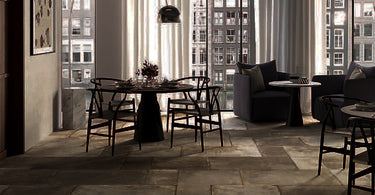
Porcelain, ceramic, natural stone – and within each, dozens of sizes, finishes and thicknesses. This guide explains the main types of tiles and, more usefully, which type works best in each part of your home and garden.
The main types of tiles
Porcelain tiles
Made from refined clay fired at very high temperatures, porcelain is dense, hard and absorbs less than 0.5% water. That makes it suitable for floors, walls, wet rooms and – in 20mm thickness – outdoor patios. See our porcelain tiles.
Ceramic tiles
Lighter and softer than porcelain, ceramic tiles are easy to cut and great value for walls, splashbacks and low-traffic floors. They are not suitable outdoors. Read more in our ceramic tiles guide.
Natural stone tiles
Travertine, marble, basalt and limestone offer unique character but usually need sealing. See our natural stone range.
Outdoor porcelain paving
Thick (20mm or 30mm) porcelain made specifically for gardens, with textured anti-slip surfaces. Browse outdoor porcelain paving.
Which tile goes where? A room-by-room guide
| Area | Best choice | What to look for |
|---|---|---|
| Kitchen floor | Porcelain | Matt or semi-polished finish, large format for fewer grout lines |
| Bathroom floor | Porcelain | Matt finish with good slip resistance |
| Bathroom and kitchen walls | Porcelain or ceramic | Gloss or polished finishes reflect light |
| Hallway | Porcelain | Hard-wearing, darker or patterned to hide dirt |
| Living areas | Porcelain | Marble, wood or concrete effects; works with underfloor heating |
| Patio and paths | 20mm outdoor porcelain or natural stone | Frost resistant, textured, anti-slip |
| Driveway | 30mm porcelain on concrete | Load-bearing thickness |
Popular looks
- Marble effect – luxury look without the upkeep of real marble.
- Concrete effect – clean, modern and forgiving of dirt.
- Stone effect – natural texture for traditional homes and gardens.
- Polished white – bright and spacious for smaller rooms.
- XL tiles – fewer joints and a seamless finish.
Porcelain vs ceramic vs stone: the short answer
If you want one tile that does almost everything, choose porcelain. Choose ceramic for budget-friendly walls, and natural stone when authenticity matters more than low maintenance. For the full comparison, read porcelain vs ceramic tiles.
Planning your project
- Calculate quantities with our tile calculator (add 10% for cuts).
- Check product terms in our glossary.
- Delivery is free on orders over £500 to England and Wales – see delivery information.
- Questions? Call 01565 621153 or contact us.